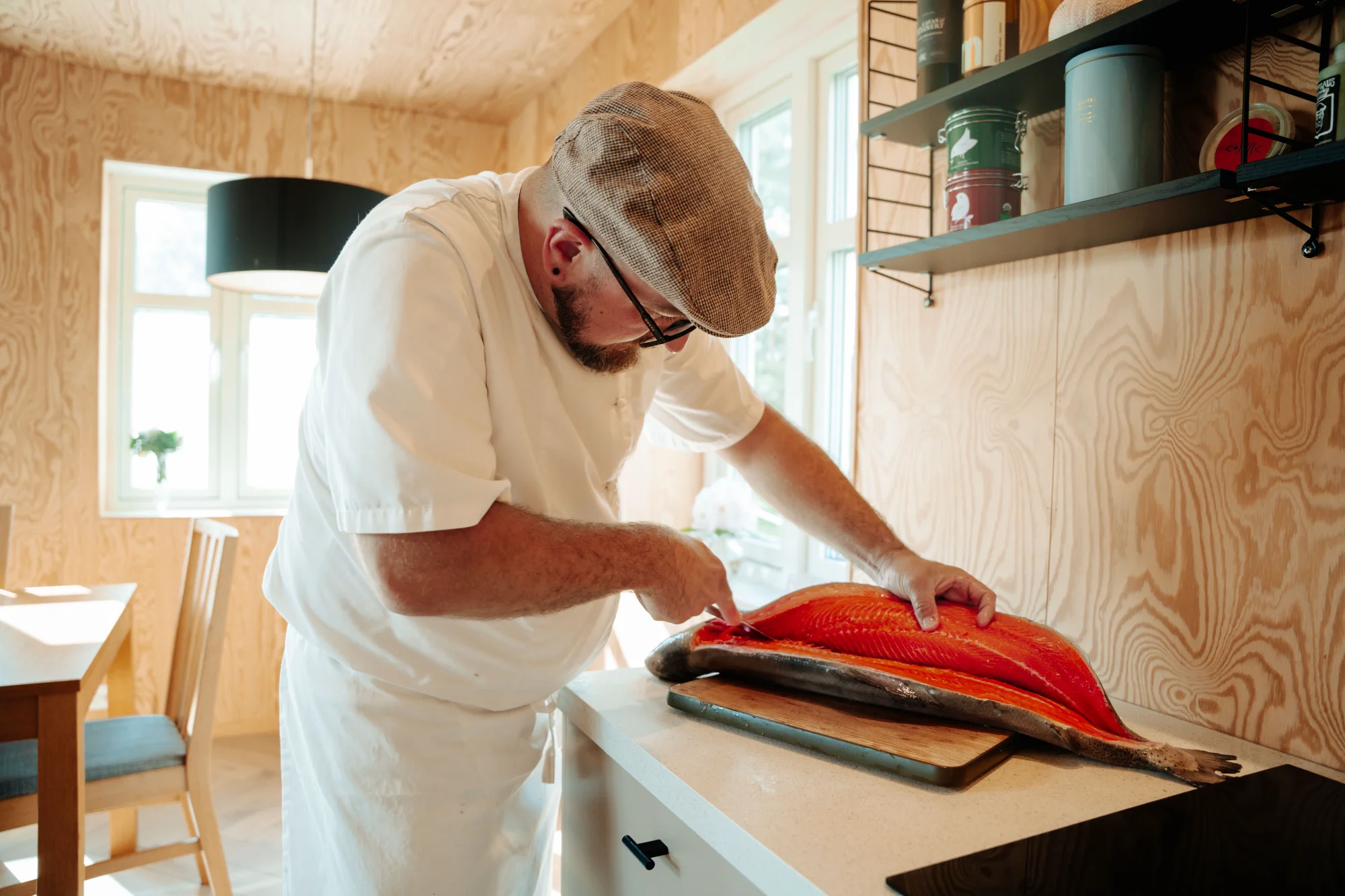
The queen of the mountains on the dining table
Arctic char and mountain trout are considered among the most sought-after freshwater fish in the Nordic countries, known for their delicate flavour and firm flesh.

Award-winning trout from Sirdal
Our mountain trout grows naturally in cool mountain water, giving it firm texture, rich flavour and outstanding flesh quality. This fish, which has been part of Nordic food culture for generations, is just as perfect for everyday meals as for special occasions – a true taste experience from the mountains.
Optimal conditions for healthy, natural growth
Clean and oxygen-rich mountain water
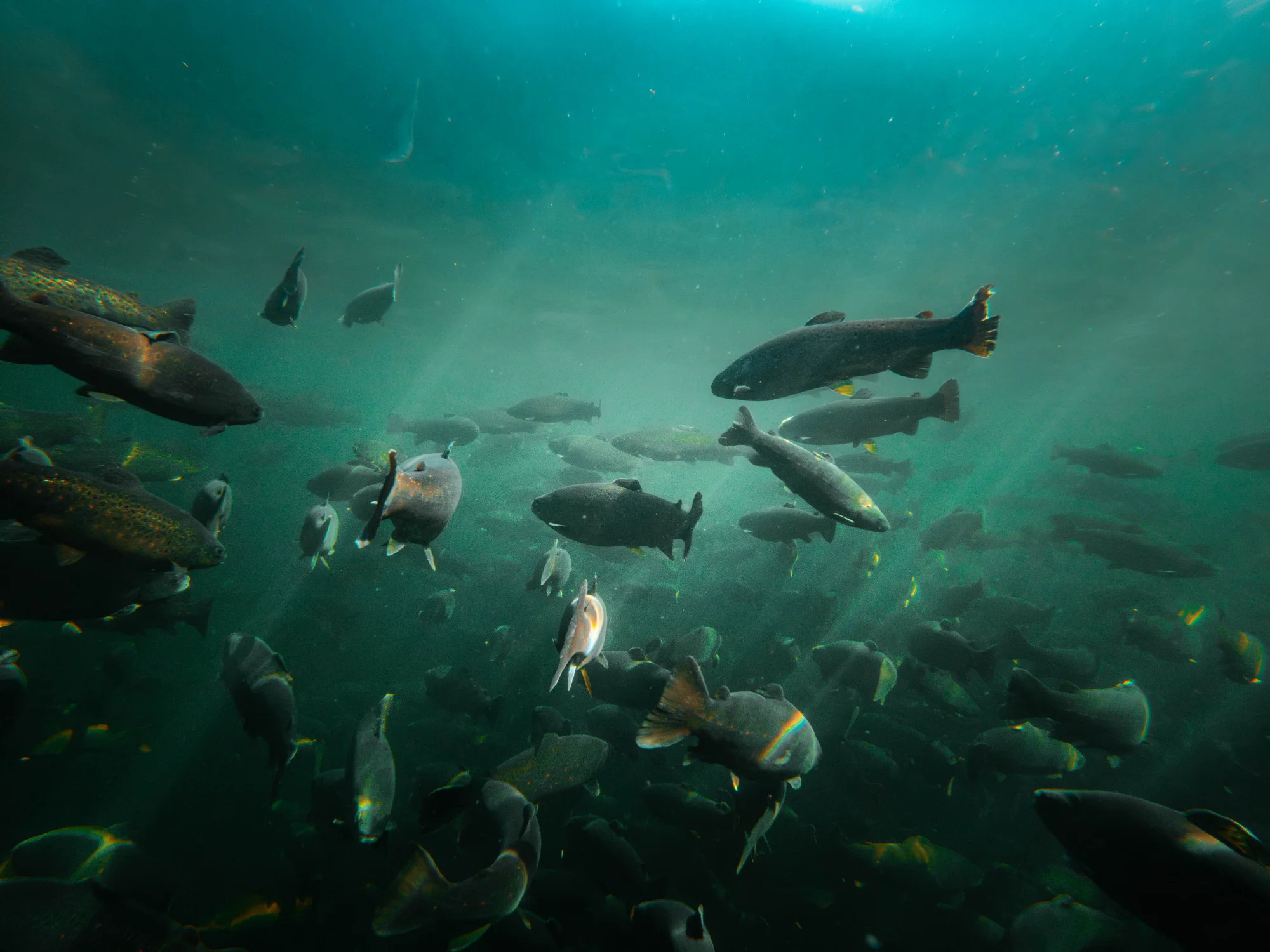
Clean and oxygen-rich water at the right temperature provides excellent growing conditions for the fish. Lake Sirdalsvatnet maintains an average temperature of 6 degrees Celsius.
Full focus on animal welfare
Low fish density in the cages promotes natural behaviour and good health. The fish are not exposed to sea lice, and we use no medicines or chemicals.
Local impact and ecosystems
We operate with native fish species. The presence of the facilities helps to maintain biodiversity in the surrounding areas.
Good fish health is important to us
The goal is to minimise stress and suffering for the fish throughout the entire production process. This is achieved through ample access to clean, oxygen-rich water, the right temperature and low fish density in the cages. The natural environmental adaptation contributes to good health and natural behaviour in the fish, which in turn ensures that the table fish is of high quality.
One of the greatest advantages of this production method is that the fish are not exposed to sea lice, and no medicines or chemicals are used. This ensures a clean, sustainable and natural product of the highest quality – straight from the mountain water to the consumer.
FAQ
We’ve compiled some of our most frequently asked questions. If you can’t find the answer you’re looking for, please get in touch.
How does the fish farm affect nature?
We work continuously to minimise the impact on the surroundings. Through good management, controlled feeding and regular environmental monitoring, we ensure that production takes place in a responsible manner and in balance with the surrounding nature.
Is there sea lice in freshwater?
No. Sea lice are marine parasites that live in salt water and cannot complete their life cycle in freshwater. Therefore, sea lice are not a challenge in the farming of trout and Arctic char in freshwater.
Why is antibiotics not needed?
Our fish grow in cold and clean mountain water with good living conditions. Preventive health management, a good environment and careful monitoring contribute to robust fish health, so the need for antibiotic treatment is very low.
What is sustainable aquaculture?
Sustainable aquaculture is about producing healthy food with the least possible impact on the environment. This involves good fish welfare, responsible use of resources, low emissions and continuous work to reduce the carbon footprint of production.
How long does it take for a mountain fish to reach slaughter size?
Due to the low temperatures in mountain lakes, the fish grows more slowly than in warmer areas. It typically takes between 2 and 4 years for the fish to reach slaughter size, depending on species, location and growth conditions.
What is the difference between brown trout and rainbow trout?
Brown trout is a native species found in Norwegian lakes and rivers, while rainbow trout originally comes from North America. Rainbow trout is characterised by a light stripe along its side and often has milder and lighter-coloured flesh than brown trout.
How much does Fjellfisk produce annually?
Fjellfisk produces approximately 1,600 tonnes of trout and 1,000 tonnes of Arctic char annually. Production takes place with a focus on quality, fish welfare and sustainable resource utilisation.
What do trout and Arctic char eat?
Trout and Arctic char receive a carefully composed feed containing fishmeal, fish oil and plant-based raw materials. The feed is developed to meet the fish's natural nutritional needs and ensure healthy growth, good fish health and high quality flesh. All use of feed is logged.
How is freshwater fish produced?
Freshwater fish such as trout and Arctic char are produced in clean lakes and mountain waters with good environmental conditions. The fish grow up in natural surroundings with a continuous supply of fresh water, contributing to good fish welfare and high quality in the final product.